AnxietyMe

Your AI Anxiety
Companion

log it when it hits. it does the rest.

AnxietyMe runs in the background and never nags. Sleep, heart rate, stress, caffeine, weather and screens are collected for you, then tested against your attack days and calm days with real statistics. Mid-attack it asks for one tap, keeps what helps you one tap away, and turns it all into a report for your GP or therapist.

How it works

log it when it hits. the rest happens on its own.
1
Log itOne tap, even mid-attack. Details later, or never
2
CollectedSleep, heart rate, caffeine, stress and weather come in on their own, in the background
3
ComparedYour attack days, next to your calm ones
4
Tests, not rulesNothing to avoid. You see what matters for you
5
Bring it alongA report of what was found, for your GP or therapist
Patterns need at least three logged attacks before there is anything honest to say. Until then the app stays quiet.
See it in action
The one-tap attack log, the triggers it collects and tests, your load day by day and the report for your therapist. Here's what living with AnxietyMe actually looks like.
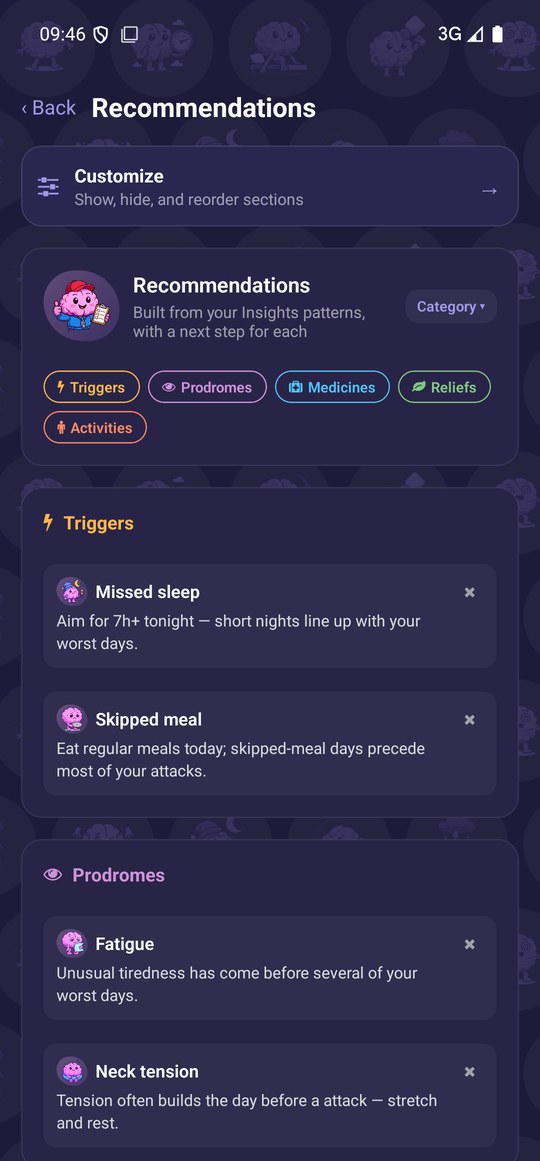
Your AI anxiety companion: log an attack, the rest is collected for you
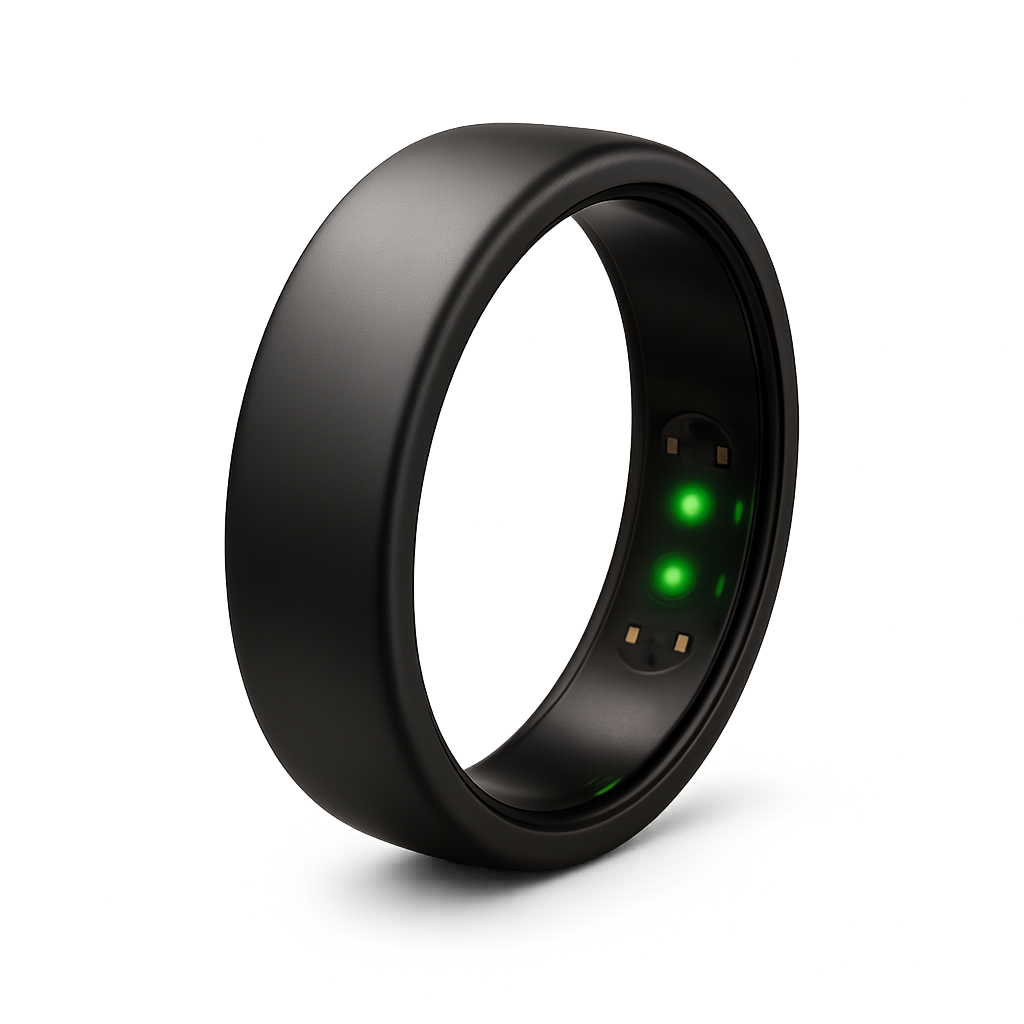
Works with Apple Watch, Garmin, Polar and Oura
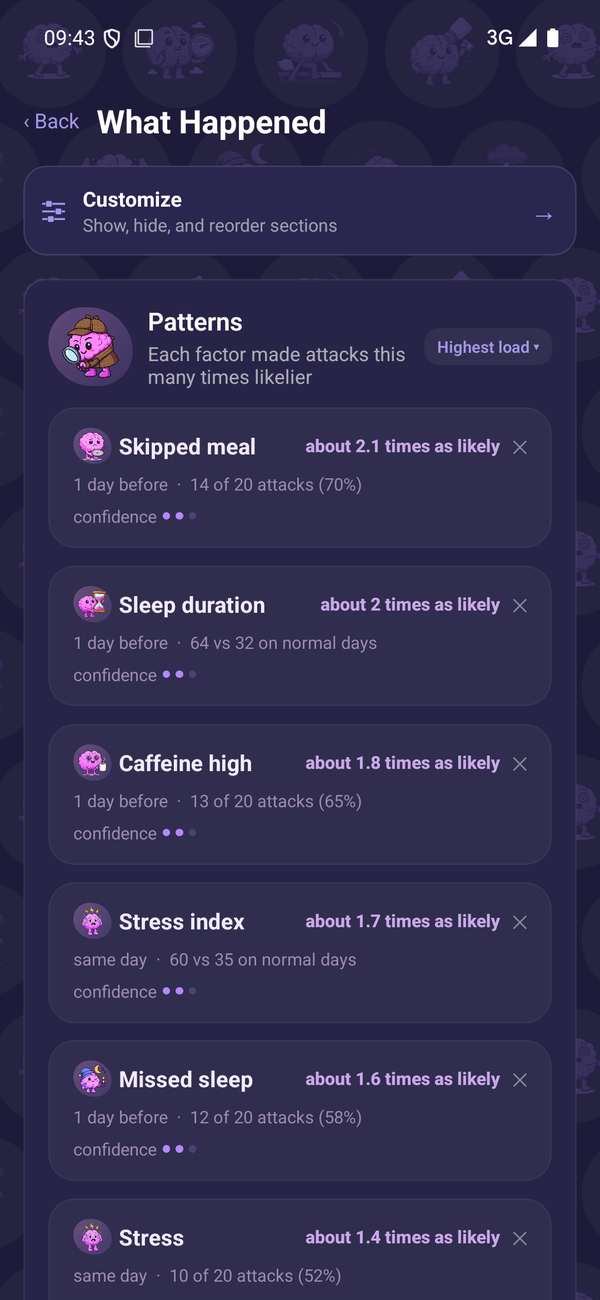
Triggers collected and tested: sleep, caffeine, stress, weather and your body
Log an attack in seconds: tap now, fill in later
Your load, day by day: the bucket, and what is pushing on it
A report for your GP or therapist: your own data as a PDF
And much more: calendar, treatments, a trusted person, community and a tested shop
Swipe to explore
why log each attack?

Electronic diaries every 3 hours for a week, in 26 people with panic disorder, picked up swings in bodily anxiety that a questionnaire after the fact would miss.

Pfaltz et al., J Anxiety Disord 2010

Log it when
it hits

one tap mid-attack. details later, or never
Tap now, fill in laterLog Attack opens on Timing. Tap now saves the entry at this moment and closes the form; an in-progress card waits on Home until you end it or add to it. Or use the stopwatch, Begin attack and End, if you want the duration.
In your body, in your mindThe symptom page is split in two. Body: racing or pounding heart, shortness of breath, chest tightness, trembling, sweating, dizzy or light-headed, nausea, choking, chills or hot flushes, tingling, jelly legs. Mind: feeling unreal or detached, fear of losing control, fear of dying, racing thoughts, urge to escape, dread.
Say it in your own wordsPaint the picture takes typed or spoken text. “Heart went in the queue at the supermarket, thought I would pass out, walked out and breathed in the car.” It fills in the pages after it for you to check, with suggestions in italics you can remove.
why a load, day by day?

In 43 people with panic disorder wearing monitors for 1,960 hours, breathing and heart rate were already unstable up to 47 minutes before an attack they felt came out of the blue.

Meuret et al., Biol Psychiatry 2011

Your load,
day by day

what is pushing on you today, and what pushed yesterday
The bucketEach trigger and early sign adds to the bucket by the weight you or the AI setup gave it, and that contribution fades day by day. Cross your Mild line and the dial turns amber; cross High and it is deeper amber. No alarm colour, no siren.
What is pushing on itActive triggers under the dial lists the top three things in the bucket right now, with how much each adds. Tap the dial for every contributor in order, and the 14-day history to see how the level rose and fell.
Hide it, tune itCustomize home at the bottom of the screen switches the card off, and the info sheet on the card says so. Load Model under Settings moves your Low, Mild and High lines and the day-by-day fade.
why test, not assume?

A review of 20 studies on alcohol and panic found each can set off the other by separate routes: no single rule fits everyone.

Cosci et al., J Clin Psychiatry 2007

Triggers, tested
not assumed

sleep, caffeine, stress, weather and screens, collected for you
Collected in the backgroundSleep timing and stages, stress, recovery, steps, caffeine and sugar, screen time, late-night screens, the noise around you, pressure, humidity and temperature, each checked every hour against a fixed line and your own 14-day normal.
The situations only you knowSocial situation, crowds or queues, public speaking, exam or interview, work pressure, an argument, bad news, health worry, a medical appointment, driving, flying, public transport, far from home, an enclosed space, being alone, doomscrolling. One tap each.
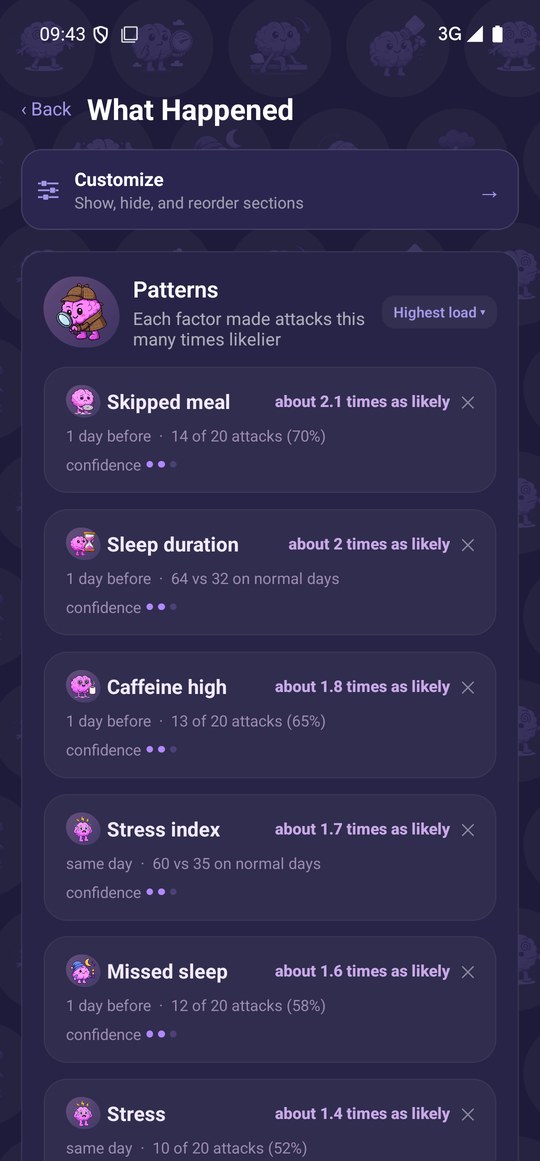
Tests, never rulesNo “avoid crowds”. Each factor is compared across your attack days and your calm days and gets a plain verdict: strong link, some link, or no link found. Avoidance is what keeps panic going; the app never endorses it.
why early signs?

Minute by minute, the last stretch before an attack was dominated by breathing changes: shallower breaths, then an abrupt rise in carbon dioxide.

Meuret et al., Biol Psychiatry 2011

The hour
before

early signs you feel, and the ones your wearable sees
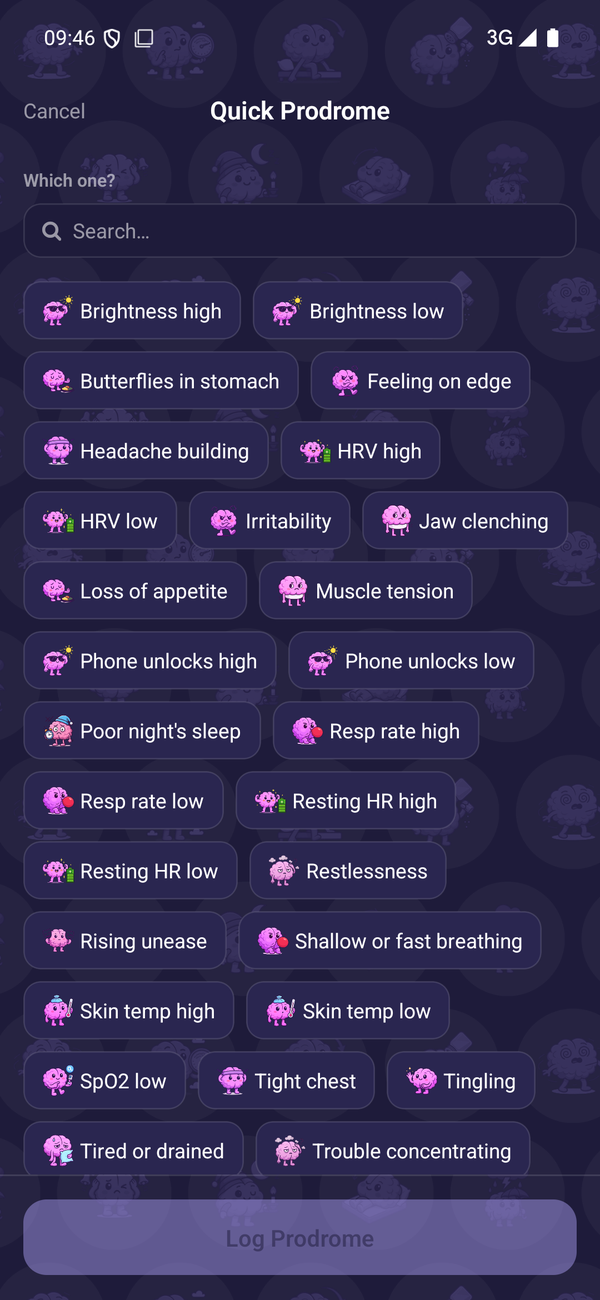
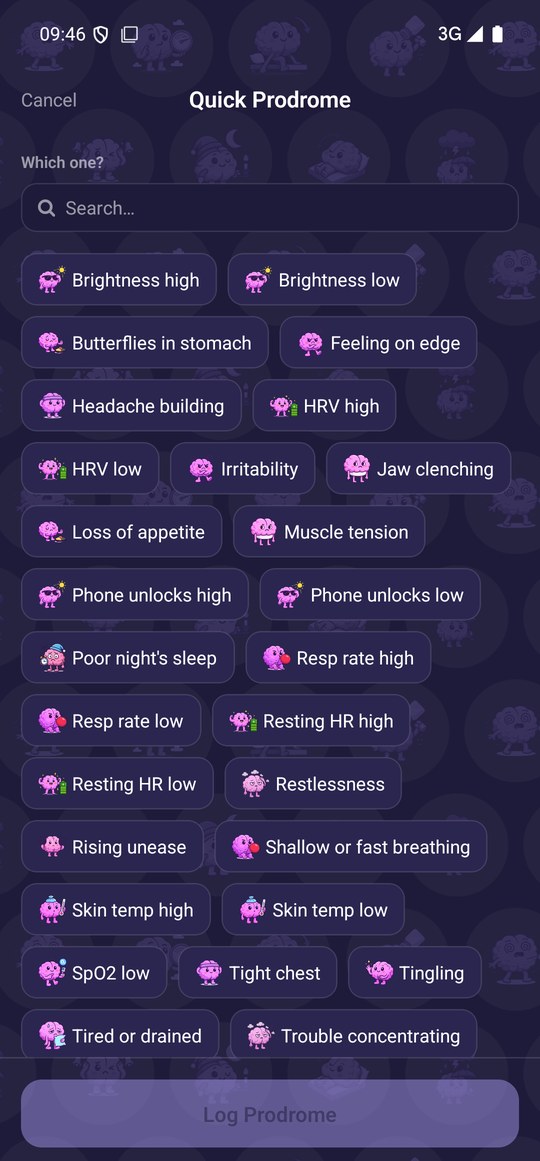
What you noticeRising unease, feeling on edge, irritability, trouble concentrating, restlessness, muscle tension, jaw clenching, butterflies in the stomach, shallow or fast breathing, a tight chest, a poor night's sleep, tired or drained, tingling, a headache building, loss of appetite. One tap from Quick Log.
What your wearable seesHRV low, resting heart rate high, respiratory rate high, skin temperature out of its range, SpO2 low: each is a collected early sign, noted when your morning numbers cross your own line.
What your phone seesPhone unlocks, screen brightness and media volume high or low against your usual are early signs too, collected on Android and iPhone without you doing anything.
why sleep?

After one night without sleep, 40% of a group of people with panic disorder had a panic attack the next day.

Roy-Byrne et al., Arch Gen Psychiatry 1986

Your sleep
collected for you

duration, timing, stages and disturbances
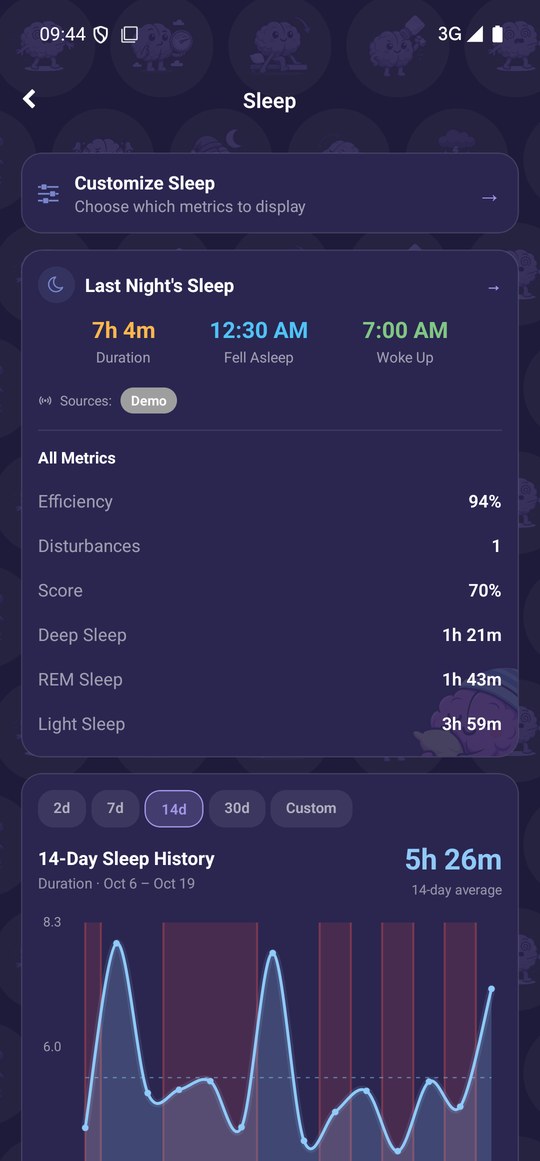
What it recordsDuration, sleep score, efficiency, disturbances, deep, REM and light sleep, when you fell asleep and when you woke. A wearable or health app gives stages and a score; an Android phone alone gives the timing.
Sleep triggers, collectedBedtime late, wake time early or late, sleep duration high or low, deep sleep high, REM and light sleep high or low, disturbances high or low. Each is noted when your night crosses its line.
The nights only you knowMissed sleep and a nightmare are one-tap triggers, and a poor night's sleep is an early sign you can log in the morning.
why your body?

Across 36 studies, 2,086 people with an anxiety disorder had lower resting HRV than 2,294 controls, including the 447 with panic disorder.

Chalmers et al., Front Psychiatry 2014

Stress, HRV
and your screens

read every morning from your wearable and your phone
Stress indexGarmin and Oura send their own stress score; for other sources the app works one out each morning from HRV and resting heart rate against your 14-day baseline. Stress high and low are collected triggers.
Heart, breathing and skinHeart rate variability, resting heart rate and respiratory rate from a connected source, with SpO2 and skin temperature when your device measures them, all plotted under Monitor and Physical Health.
Screens and the noise around youScreen time and late-night screen time on Android, phone unlocks, brightness and media volume on both platforms, and, with the microphone allowed, the noise level around you. Only the level leaves the phone, never a recording.
why weather?

Across 3.5 million US emergency visits, days of extreme heat went with 7% more visits for anxiety, stress-related and somatoform disorders.

Nori-Sarma et al., JAMA Psychiatry 2022

The weather
for where you are

heat, pressure, humidity, wind, UV and storms, for your city
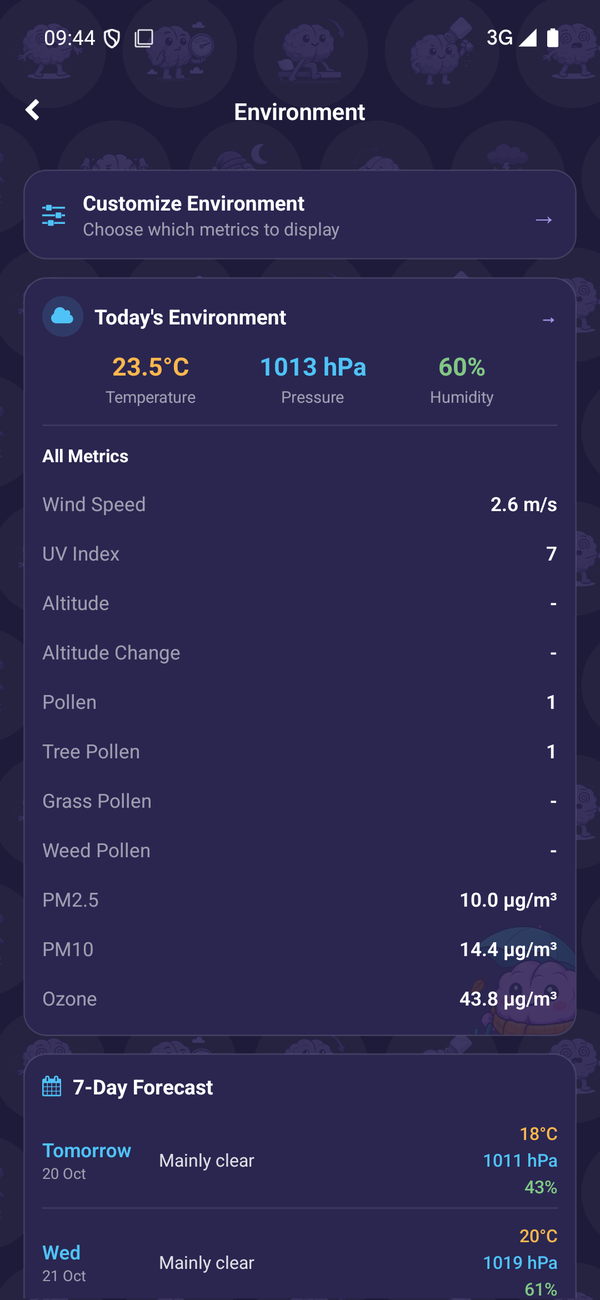
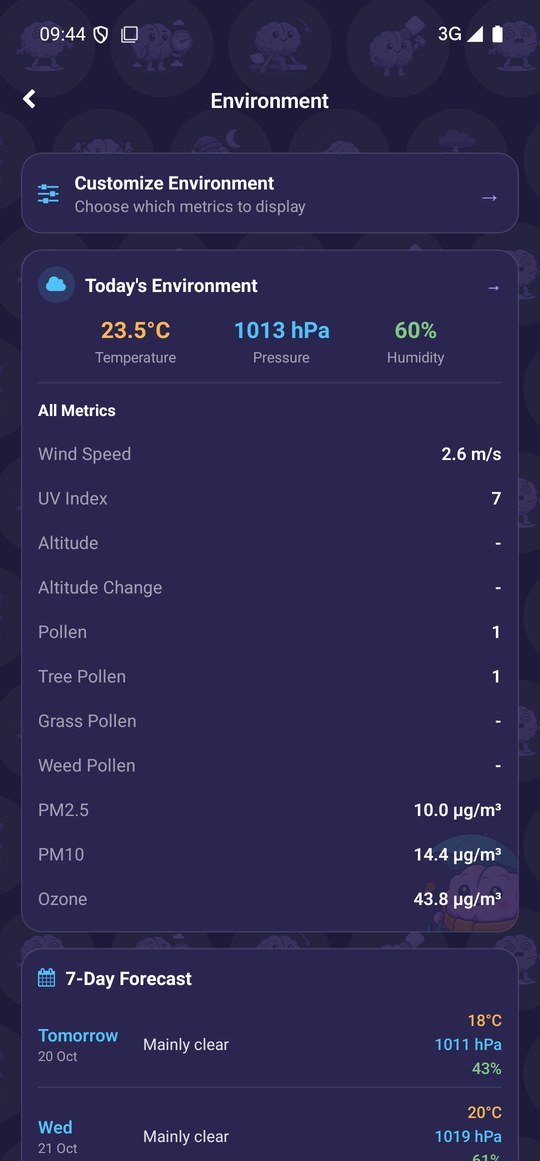
Heat and humidityTemperature high and low and humidity high and low are collected triggers, checked against a fixed line and your own 14-day normal. Hot weather is also a one-tap trigger for the day you felt it.
Pressure, and the dropWhen today's pressure is 10 hPa or more below yesterday's, a card on Home shows both numbers. Pressure high and pressure low are collected triggers too.
Wind, UV, storms, pollen and airCollected daily for your city from the moment you allow location, with a thunderstorm banner on storm days. Pollen and air quality are there as well, off until you switch them on in Data.
why caffeine?

In nine placebo-controlled studies of 237 people with panic disorder, 51% had a panic attack after a caffeine challenge and none after placebo.

Klevebrant et al., Gen Hosp Psychiatry 2022

Caffeine, alcohol
and food

a test for you, not a rule for everyone
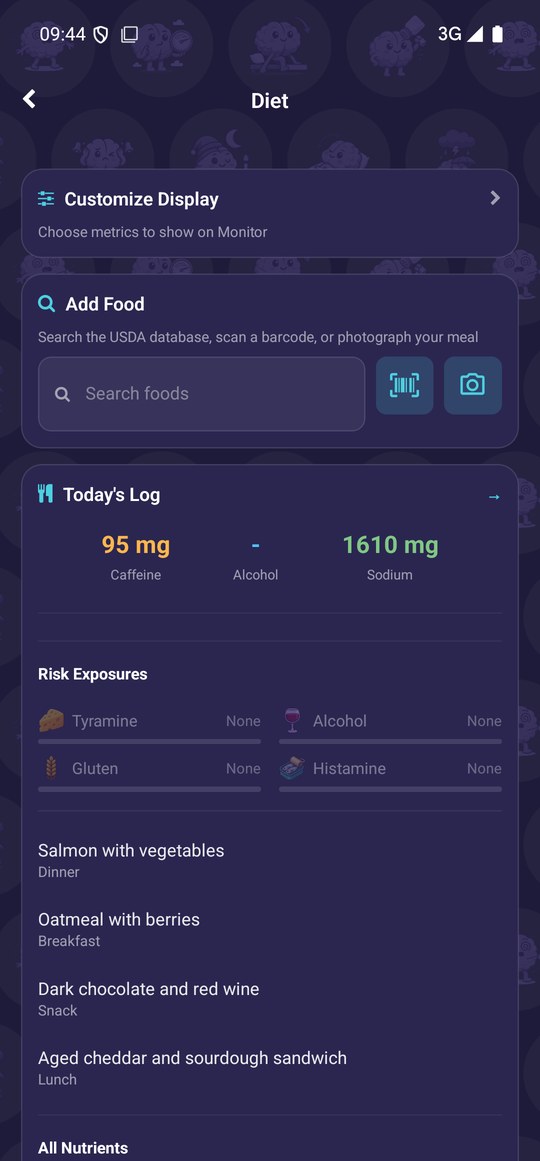
Caffeine and sugar, summedSummed per day from what you eat and drink, and shown on the Diet card in Monitor. Caffeine high and low and sugar high and low are collected triggers, checked against your own two-week normal.
Alcohol, hangover, skipped mealAlcohol, a hangover, a skipped meal and low blood sugar are one-tap triggers from Quick Log, for the days a food log would not show. During setup you say how often each shows up around your attacks.
Add food in secondsSearch the USDA database, scan a barcode or photograph your plate, and the food comes back with its nutrients for you to check. Logging food in the app is part of Premium; nutrition from Apple Health or Health Connect comes in free.
why your own history?

Two weeks of in-the-moment check-ins showed how symptoms move and feed each other differently in each person, which is what a treatment can be tailored to.

Robinaugh et al., Gen Psychiatr 2020

It finds your
patterns

your attack days, next to your calm ones
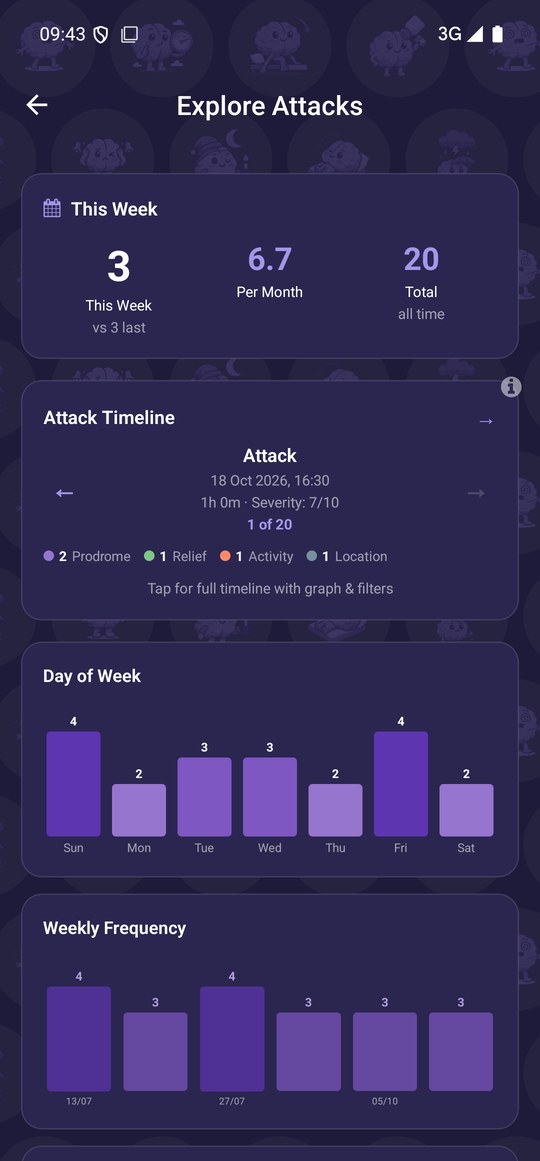
What Happened, and the combinationsEach factor compared around your attacks and on your other days, with a plain verdict: strong link, some link, or no link found. Some things only go together, so the pairs that line up with your attack days are listed too.
What Worked, and What Strengthens YouEvery medicine and relief you logged, read back against how your attacks went. Beside it, the habits and steady signals that turn up on your days with no attack, measured against your own normal.
What changed, and how it affected youThe last 30 days against the 30 before, your severity spread and top symptoms, what you missed because of an attack, and what you were doing and where.
why understand it?

Across 54 trials and 3,021 patients, psychological therapies beat waiting, with CBT the most studied; worth asking a therapist about.

Pompoli et al., Cochrane 2016

Ask about your
own data

a chat that reads your history, and tests worth running

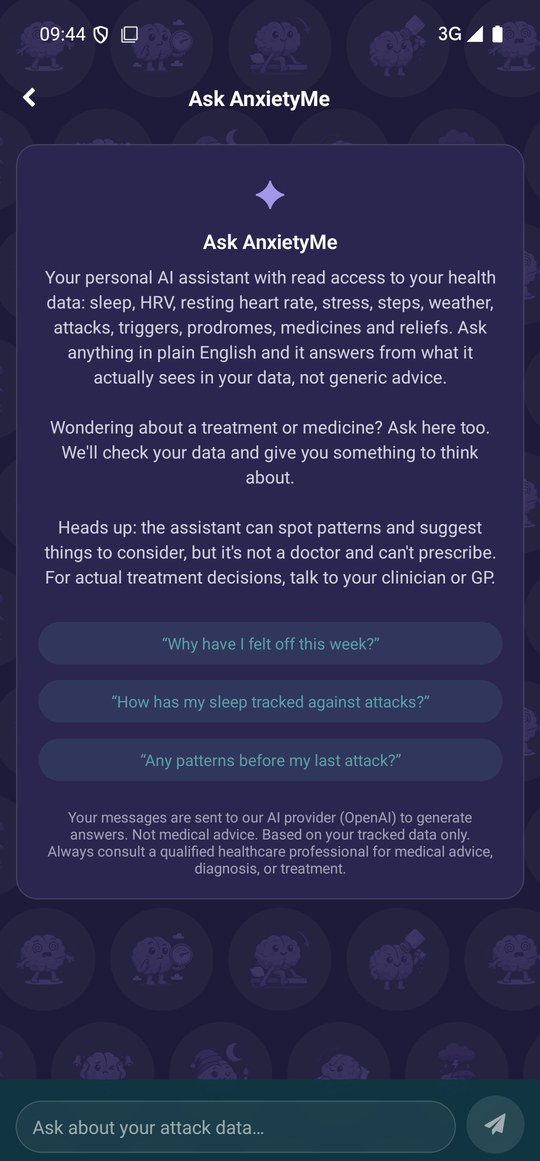
Ask AnxietyMe reads your own sleep, heart rate, stress, weather, attacks and treatments and answers in plain words. Insights then takes what is already showing up in your data and turns each pattern into one thing worth testing for a week.

Ask AnxietyMeA chat with read access to your sleep, HRV, resting heart rate, stress, steps, weather, attacks, triggers, medicines and reliefs. “When was my last attack, and how did I sleep before it?” gets the date and the numbers. Mid-attack it keeps to two short sentences: breathe out slowly, this passes.
Tests worth runningEach one starts from your own numbers and ends the same way: worth testing, a week of one specific condition, then the app compares your days. Never a rule, never an avoidance, never a promise.
Setup in your own wordsAt the start, talk, type or import a file about your anxiety. The AI fills in what you told it and suggests what else is worth comparing; you change any of it on the next pages.
Dismiss anything that does not match your reality and it stays hidden. Starting points to discuss with your GP or therapist, not diagnoses.
why a record?

Lifetime, 22.7% of US adults have had a panic attack and 4.8% panic disorder, yet in the past year only 18% to 55% got treatment that met the guidelines.

Kessler et al., Arch Gen Psychiatry 2006

Bring it to your
therapist

one report, and sharing on your terms
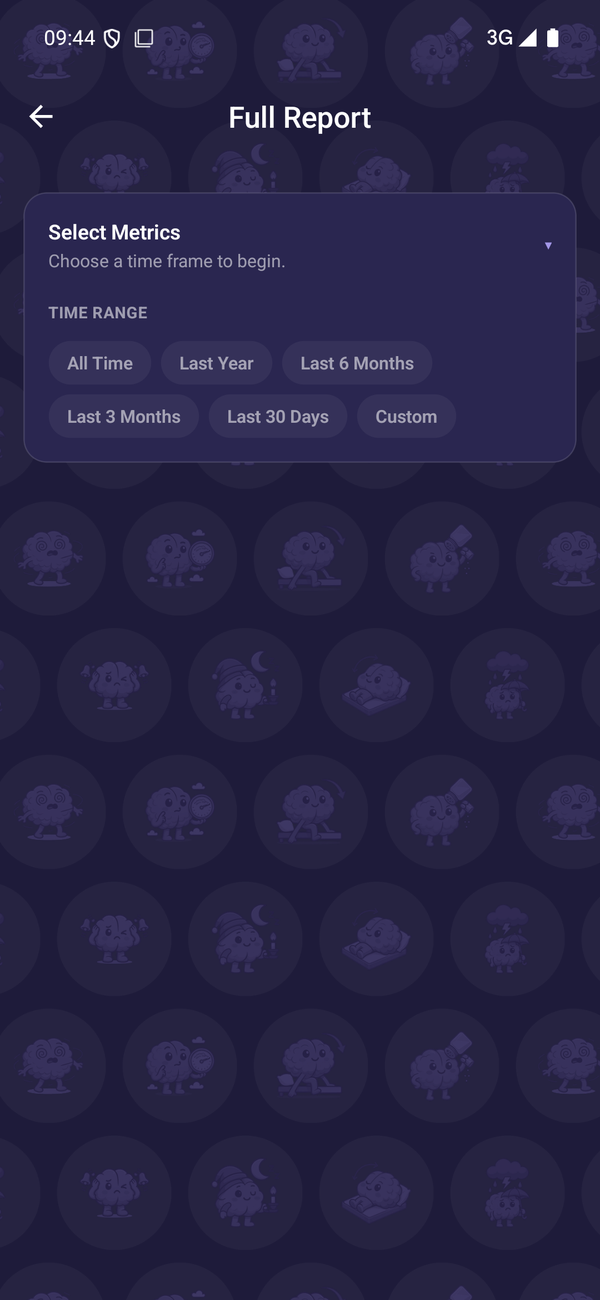
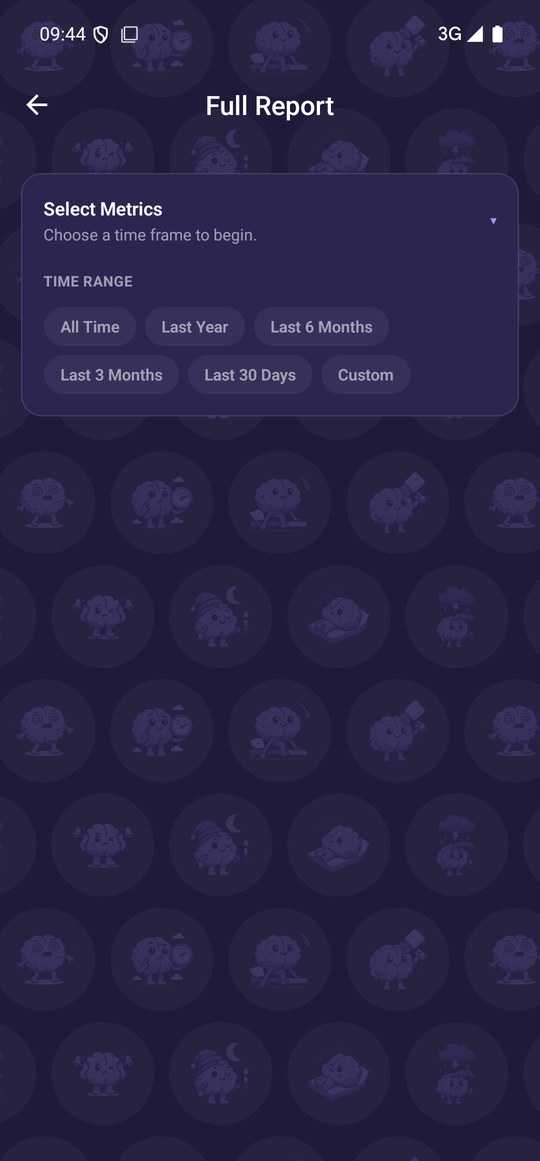
One report, filtered and exportedHow often, what happened around your attacks, treatments and what worked, what strengthens you, what you were doing, the severity spread, the timeline and your health metrics. Filter by time range or tag, then Generate Report and share the PDF.
A trusted personInvite a partner, parent or friend as a caregiver and they see your timeline on their own phone: your attacks and what was around them, nothing else. You can stop it at any time.
Care near you, on your termsTherapists and clinics near you that work with anxiety and panic, listed from Google, not part of AnxietyMe and unable to see your data. A practitioner on AnxietyMe sees nothing until you accept.
why note what helps?

In 41 people with panic disorder, four weeks of breathing training corrected low carbon dioxide levels and cut panic severity as much as cognitive training did.

Meuret et al., J Consult Clin Psychol 2010

Set it once
see what worked

breathing, grounding, medicines and the things you reach for
Reliefs, one tapSlow breathing, box breathing, grounding (5-4-3-2-1), a walk outside, fresh air, cold water on the face, holding something cold, sitting or lying down, talking to someone, leaving the situation, music, meditation, muscle relaxation, a stretch, a shower, a quiet room, a screen break, eating, water, a hug or a pet, writing it down, light exercise, yoga, a warm drink, sleep.
Treatments, set onceAdd a drug, a therapy or a lifestyle change with its amount, how often and the day it started. The treatment page shows your attack days a month before and since, average severity and what else moved.
What WorkedEach medicine and relief read back against how your attacks went: works well, some help, no clear effect, or not enough yet, with the reason underneath.
why move, why talk?

Fifteen trials with 675 patients: aerobic exercise eased raised anxiety against a waiting list, and the harder programmes did more.

Aylett et al., BMC Health Serv Res 2018

You are not
alone in this

articles, a forum, and care near you
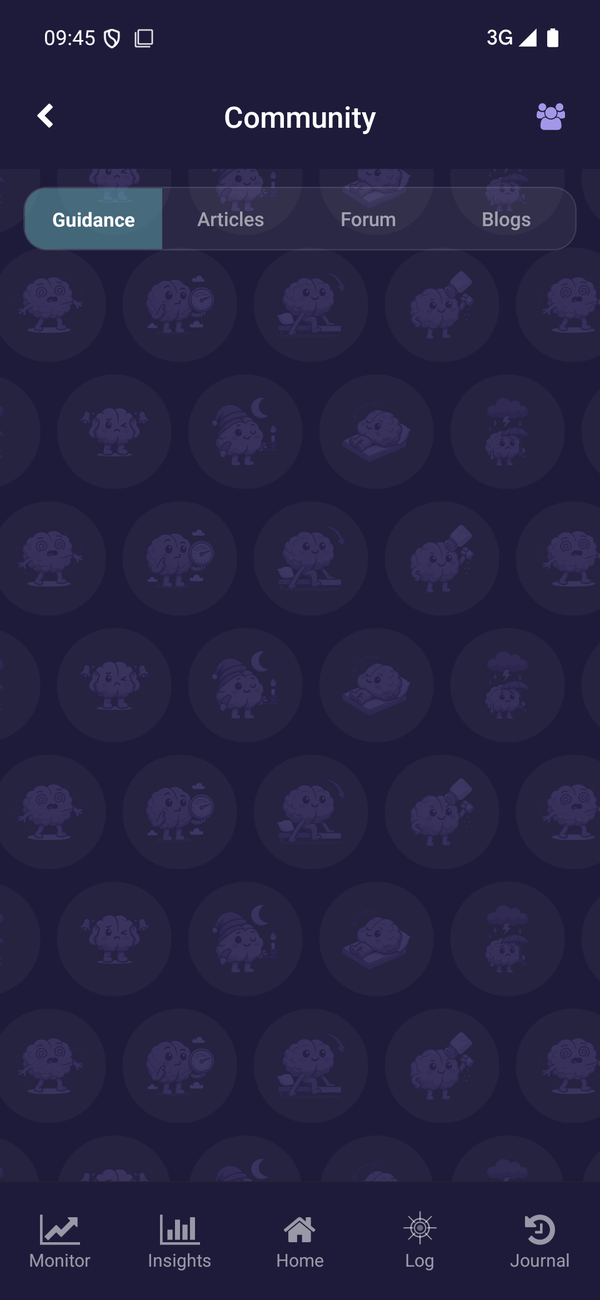
ArticlesAnxiety and panic news and research, each with a short plain-language summary and tags, and only published if it is genuinely about anxiety, panic or the things that go with them. Miracle-cure marketing is filtered out.
Forum and blogStart a discussion or reply to one, with a report button on every post. The AnxietyMe blog is there too, and at anxietyme.app/blog.
Find care near youWith location on, therapists and clinics near you that work with anxiety and panic. They come from Google, are not part of AnxietyMe and cannot see your data.

And there's
much more

the rest of what it does
A trusted personInvite a partner or friend as a caregiver. They see your timeline on their phone, attacks and what was around them, and you can remove them any time.
Apple Watch, through Apple HealthNo watch app to learn. Apple Watch sleep, heart rate, HRV and breathing rate come in through Apple Health; Garmin, Oura, Polar and WHOOP connect directly.
Your cycle, if you wantLog your periods and the app shows when the next is due, so the days around it can be compared with your attacks. Nothing happens until you set it up.
Your calendar, read for youAllow calendar access and the daily check-in lists what was in your day, meetings, travel, events, so a trigger can be filed in one tap instead of typed.
Bring your old notesImport a file of past attacks, from a spreadsheet or another app's export. You see what was found before anything is saved.
Articles, forum and blogAnxiety and panic articles with short summaries, a forum, and the AnxietyMe blog, in the app and at anxietyme.app/blog.

Questions

What is AnxietyMe?

An app for iPhone and Android for people who have panic attacks or anxiety attacks. You log an attack when it hits, one tap. AnxietyMe collects sleep, heart rate, stress, caffeine, weather and screen time on its own, compares your attack days with your calm ones, and turns what it finds into a report for your GP or therapist.

Can an app help with panic attacks?

An app cannot cure panic disorder, and AnxietyMe does not claim to. What it can do is answer “what goes with my attacks?” from your own data instead of guesswork, keep the things that help you one tap away, and put the pattern on paper for your GP or therapist.

Does it predict panic attacks?

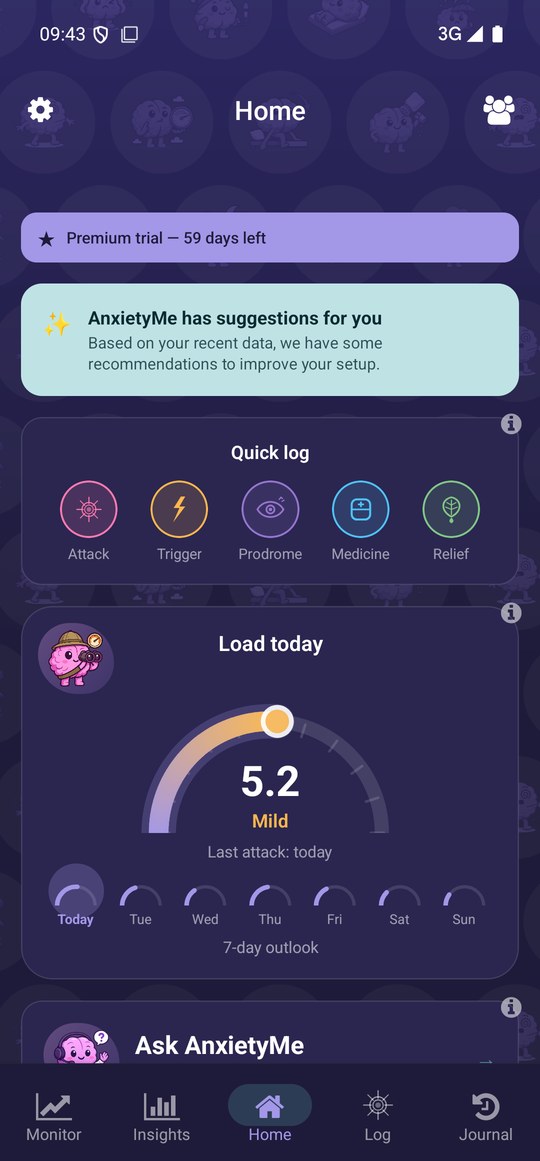
No. Load today is a sum of what you logged and what was collected over the last seven days, faded by age. It describes the week you have had. The app never says an attack is coming, never sends a warning unless you switch an alert on, and the card can be hidden.

Is AnxietyMe free?

Logging attacks, early signs, triggers, medicines and reliefs, the background collection, the Journal, Load today, the community and the nearby list are free. Premium adds Insights, Ask AnxietyMe, the tests worth running, Active triggers, the 7-day outlook, the Full Report and PDF, the Treatments page, practitioner sharing and food logging: £7.99 a month or £54.99 a year. New accounts get 14 days of Premium free.

Will it tell me to avoid things?

No. There is no rule that fits everyone, and avoiding places is what keeps panic going. AnxietyMe tests each factor against your own attack days and calm days and tells you whether it matters for you. If it does, it suggests a week worth testing, never a rule.

Do I need a wearable?

No. Weather comes from your location, your phone can read screen time and sleep timing on Android, and the situations are one tap. A wearable, Apple Health or Health Connect adds sleep stages, heart rate, HRV, breathing rate and stress. Garmin, Oura, Polar and WHOOP connect directly; Apple Watch comes in through Apple Health.

Will it keep asking me how I am?

No. Notifications are off until you switch one on. The evening check-in is there if you want it, and the setup questions are asked once.

Is my health data private?

Yes. We don't sell your data and we don't share it with advertisers. All health data is encrypted at rest and in transit, and you can delete your account and your data at any time. A practitioner sees your data only where you accepted their request, and a trusted person only what you invited them to.

Is AnxietyMe a medical device?

No. It shows patterns in your own data to help you and your clinician; it does not diagnose or treat anything. Panic symptoms are frightening but not dangerous. Chest pain that does not settle, fainting, an attack that lasts over an hour, or thoughts of harming yourself need urgent help now.
Start the AnxietyMe journey

log it when it hits · on iPhone and Android

Your data is yours.

We don't sell your data. We don't share it with advertisers. All health data is encrypted at rest and in transit. AnxietyMe is fully GDPR compliant. Your attacks and your symptoms stay in your account, and a practitioner sees nothing until you accept.

Want to leave? Delete your account and every byte goes with you. No questions, no retention, no dark patterns.

AnxietyMe

Log it when it hits.
Forget the app the rest of the time.

Available on iOS and Android.